Creative nonfiction was a genre that I was only recently introduced to. It’s both familiar in some ways and yet quite alien at the same time to the type of literature I usually read. This is a genre that’s definitely expanding my horizons on just what forms both writing and artistic expression can take.
One thing that I found a little more difficult for me to relate to is that many of the authors who populate this particular genre have a very flowery, overly descriptive style that does not mesh well with my preferences as either a writer or reader. Some of the works also delve too deep into emotions which I also don’t find appealing. However, I didn’t think that was a limitation of the genre, in fact this genre seems quite flexible. I was even able to find a writer whose style I found more comfortable and compatible with my own.
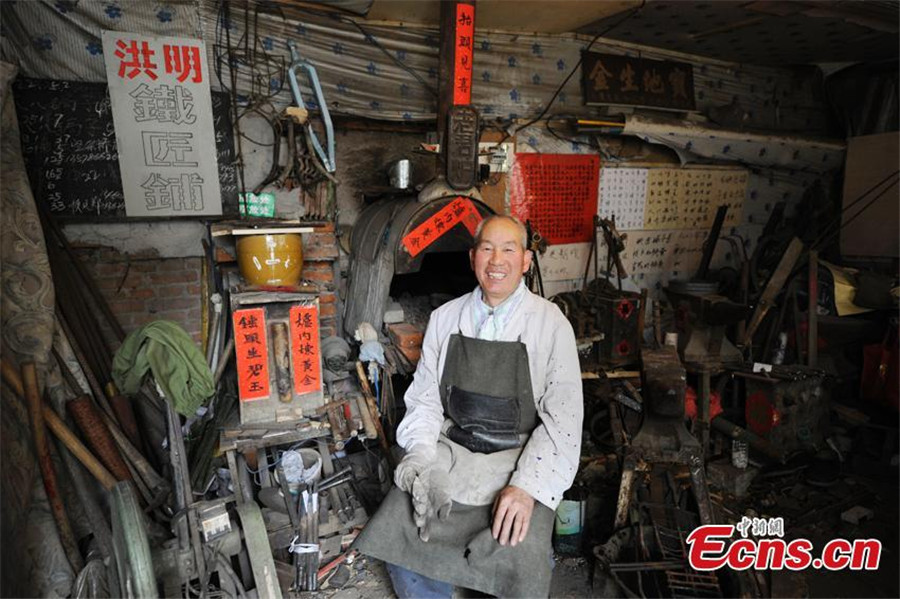
That writer is Chen Li. I actually found two different essays of his but I’ll focus on Mushan’s Blacksmith Shop. The form that contributes the most to the piece is that while he states at the beginning that the blacksmith is getting old he doesn’t leave it at just that. He illustrates it with his language. Everything he describes explains why the blacksmith is getting old. He’s napping during the day, he has gray hair, and dreams of times long past. He frames it all by starting the very beginning and the last paragraph of the piece with “The blacksmith of Mushan’s Blacksmith Shop is getting old.” The full circle drives that fact home in a neat package.
The piece is made aesthetic by using colorful language to paint the picture of the scene in the reader’s head rather than using drab, matter of fact language. Like, “In the balmy sunshine, his gray hair sparkles with the same silver glints as those on his reading glasses.” Another literary device used is metaphor, “Nowadays, ditchwater and rainwater all converge in front of the shop. Those pedicabs—no, they’re iron bullock carts now—almost turn into motorboats.” The comparison emphasizes the amount of water collecting in front of the shop and how there’s so much water that carts going through it must churn through all the water just like a motorboat.
The ethics the writer seems to be using is relaying what he personally experienced and observed. When he goes beyond the known he attributes it to the blacksmith possibly dreaming. Only the blacksmith himself would know if that’s the case and since many people forget their dreams even he may not know for sure. I think that’s using his artistic license as a writer responsibly. He’s not attributing words to the blacksmith that the blacksmith never spoke or making events up, only speculating what he may have dreamed about.
Chen maintains an authentic tone to his piece. That’s one of my main concerns when writing my next CNF piece. I want to be descriptive and entertaining but also authentic. It also inspires me to use colorful language in such a way that it helps to give my readers a taste of what my experiences were actually like. They’re not just reading or hearing about my experiences but reliving at least a little bit of it themselves as I use my words to take them on a literary adventure.
 Jonathan's Blog